Generative Artificial Intelligence, commonly known as Generative AI, has become one of the most important developments in modern technology. Unlike traditional artificial intelligence systems that are mainly designed to analyze information, classify data, or make predictions, generative AI can create new content based on the information and patterns it has learned. This content can include text, images, audio, video, computer code, presentations, and other digital materials. The rapid growth of generative AI tools has changed the way people work with computers and has introduced new possibilities for businesses, developers, students, designers, researchers, and content creators.
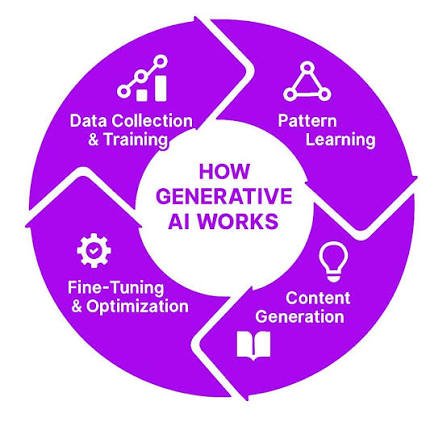
Generative AI works by using advanced machine learning models trained on large amounts of data. During training, these models learn patterns, relationships, structures, and characteristics within the data. When a user provides an instruction, often called a prompt, the system processes the request and generates an output based on what it has learned. Modern generative AI systems can produce highly detailed and contextually relevant results, which is why they are increasingly being integrated into search tools, productivity software, development environments, customer service platforms, creative applications, and business systems.
The concept of artificial intelligence is not new, but the recent development of large-scale machine learning models has significantly increased the capabilities of AI systems. Improvements in computing power, specialized hardware, large datasets, neural network architectures, and training techniques have made it possible to build models capable of generating increasingly sophisticated content. As a result, generative AI has moved from being primarily a research topic to becoming a practical technology used in everyday digital applications.
What Is Generative AI? How It Works, Uses, Benefits and Future