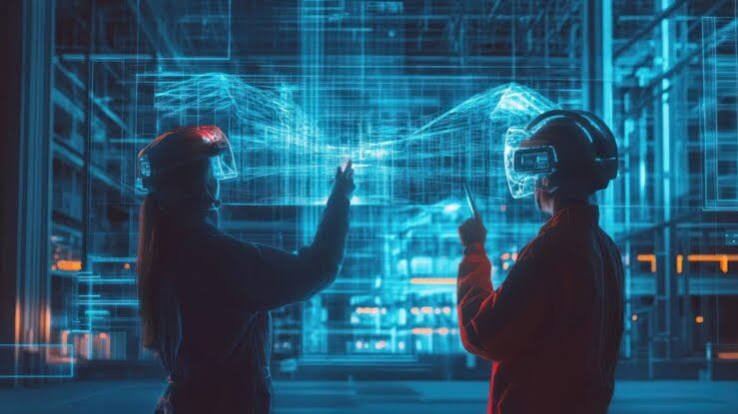
Digital Twin technology is becoming an important part of modern digital transformation as businesses look for better ways to understand physical machines, buildings, factories, vehicles, and industrial processes. A digital twin is a virtual representation of a real-world object, system, or environment that can use data from sensors and connected devices to reflect what is happening in the physical world. Instead of relying only on historical reports or manual inspections, organizations can use digital models to monitor performance, identify potential problems, test changes, and improve operations. As Internet of Things technology, cloud computing, artificial intelligence, advanced sensors, and real-time data processing continue to develop, digital twins are becoming more practical for industries beyond traditional manufacturing.
The basic idea behind a digital twin is relatively simple, even though the technology supporting it can be highly sophisticated. A physical object such as an industrial machine can have a virtual representation containing information about its design, operating condition, performance, maintenance history, and current sensor readings. Data can continuously move between the physical asset and its digital representation, allowing the virtual model to become a useful source of information about the real object. Depending on the implementation, a digital twin can range from a relatively simple monitoring model to a complex simulation capable of representing the behavior of an entire factory, transportation network, building, or energy system.
One of the most important characteristics of digital twin technology is the connection between physical and digital environments. Traditional software systems often store information about equipment without necessarily maintaining a continuously updated model of how that equipment behaves. A digital twin attempts to create a more dynamic relationship. Sensors installed on a physical asset can collect information such as temperature, pressure, vibration, speed, energy consumption, location, or operating status. That information can then be processed and displayed through the digital model. When enough historical and real-time information is available, organizations can use the twin to understand patterns and investigate possible causes of performance changes.
Internet of Things technology plays a major role in many digital twin implementations. IoT devices can collect information from machines, vehicles, buildings, industrial equipment, and other physical systems. These devices can communicate measurements to software platforms where the information is processed and analyzed. The digital twin can then use the incoming data to represent the current condition of the physical asset. Without reliable data, a digital twin may become little more than a static digital model. For this reason, sensors, connectivity, data platforms, and analytics are fundamental components of many successful digital twin systems.
Artificial intelligence can make digital twins significantly more useful by helping organizations analyze large volumes of operational data. A basic digital twin might show that a machine is operating at a particular temperature, while an AI-enabled system could analyze historical patterns and identify combinations of conditions associated with future failures. Machine learning models can potentially detect unusual behavior, estimate remaining useful life, classify operating conditions, or identify relationships that would be difficult to discover manually. This creates a connection between digital twins and predictive maintenance, where companies attempt to address equipment problems before they result in major operational disruption.
Manufacturing is one of the most important areas for digital twin adoption because factories contain large numbers of machines, production lines, sensors, and interconnected processes. A manufacturer can create digital representations of individual machines as well as larger production systems. Engineers can use these models to understand how equipment operates, analyze production performance, and investigate potential bottlenecks. Instead of experimenting directly on a live production line, some changes can first be evaluated in a virtual environment. This can reduce disruption and allow teams to compare different scenarios before implementing physical changes.
Digital twins can also support product development. Engineers traditionally create physical prototypes to evaluate how a product performs under different conditions. Physical prototypes remain important, but virtual models can allow teams to simulate many situations before building every physical version. For example, a company developing industrial equipment can create a digital representation and evaluate how design changes may affect performance. If simulations identify a potential issue, engineers can modify the design before investing significant resources in physical manufacturing. This approach can reduce development cycles and help organizations evaluate more design possibilities.
The automotive industry is another major area where digital twins can be useful. A vehicle can generate significant amounts of operational data through sensors and electronic systems. Manufacturers can use digital models to study vehicle performance, maintenance requirements, energy consumption, and component behavior. Electric vehicles create additional opportunities because battery temperature, charging behavior, energy consumption, and battery health can be monitored through digital systems. A digital twin can potentially combine this information with models that help engineers understand how vehicle components behave under different operating conditions.
Digital twins are also relevant to smart buildings. Modern buildings can contain sensors that monitor temperature, humidity, occupancy, lighting, air quality, electricity consumption, equipment performance, and other conditions. A digital twin can combine these data sources into a virtual representation of the building. Facility managers can use the system to understand how different areas are being used and how building systems are performing. This information can support decisions about heating, cooling, lighting, maintenance, and energy management. In larger commercial buildings, even relatively small improvements in operational efficiency can become significant when applied continuously.
The concept can also be applied to entire cities. A city digital twin can combine information from transportation systems, buildings, environmental sensors, utilities, public infrastructure, and other sources into a digital representation of urban activity. Such a system can potentially help planners examine how changes to roads, public transport, buildings, or infrastructure could affect the wider environment. Instead of evaluating every proposal only after construction begins, planners can use simulations to explore possible outcomes. However, city-scale digital twins are complex because they involve enormous amounts of data and many interconnected systems operated by different organizations.
Transportation networks provide another interesting application. Roads, railways, airports, ports, and public transportation systems contain numerous moving and stationary assets. A digital twin can represent the condition and operation of these systems and combine data from vehicles, infrastructure, traffic sensors, schedules, and other sources. Transportation organizations can use this information to analyze congestion, maintenance requirements, capacity, and potential disruptions. Simulating different scenarios can help planners understand how changes in traffic patterns or infrastructure could affect system performance.
In aviation, digital twin technology can be applied to aircraft components, engines, maintenance processes, and airport infrastructure. Aircraft operate under demanding conditions, making accurate monitoring particularly important. Sensors can generate information about temperature, pressure, vibration, fuel consumption, and other parameters. Digital models can help engineers analyze this information and identify unusual patterns. Over time, the combination of operational data and engineering models can support maintenance planning and improve understanding of component behavior.
Energy companies can also use digital twins to monitor complex infrastructure. Power plants, wind turbines, solar installations, electrical networks, batteries, and other energy assets can be represented through digital models. A wind turbine, for example, operates under changing wind conditions and mechanical loads. Sensors can provide information about vibration, temperature, rotational speed, and energy output. A digital twin can combine these measurements with historical data and engineering models to help operators understand performance and identify maintenance requirements.
Renewable energy makes digital twins particularly interesting because energy generation can vary significantly depending on environmental conditions. Solar panels are affected by sunlight, temperature, dust, shading, and equipment condition, while wind turbines depend on wind speed and direction as well as mechanical conditions. Digital models can help organizations compare expected and actual performance. When a system produces less energy than expected, operators can investigate whether the cause is environmental, mechanical, electrical, or operational. This can support more efficient maintenance and asset management.
Healthcare is another field where the digital twin concept is attracting attention, although healthcare applications involve additional complexity and privacy considerations. Digital representations can potentially be used for medical equipment, hospitals, operational processes, and, in more advanced research settings, aspects of individual patients. A hospital digital twin could represent departments, equipment, patient flow, resource utilization, and facility operations. Simulations could help administrators evaluate how changes in staffing, room allocation, or patient movement might affect hospital operations without immediately changing the real environment.
Digital twins related to individual patients are considerably more challenging because human biology is highly complex. Researchers have explored approaches that combine medical records, imaging, sensor information, physiological measurements, and computational models. The objective can be to create a personalized representation that helps researchers or clinicians understand how certain conditions or treatments might behave. Such technology remains an evolving area and should not be confused with a simple software profile. Reliable medical digital twins require high-quality data, validated models, appropriate clinical oversight, and strong privacy protections.
The aerospace industry has also used digital modeling and simulation for many years, and digital twin concepts can extend these capabilities. Spacecraft, aircraft, engines, satellites, and other complex systems can be represented digitally and monitored using operational data. Engineers can use digital models to understand how equipment behaves under different environmental conditions. In space missions, where physical repair can be extremely difficult or impossible, the ability to analyze equipment remotely can be particularly valuable. Digital twins can therefore become part of a broader engineering approach that combines simulation, telemetry, monitoring, and predictive analysis.
Construction is another industry where digital twins can connect design information with real-world building operations. Building Information Modeling, commonly known as BIM, already provides detailed digital representations of buildings and infrastructure. Digital twin systems can extend these models by incorporating real-time information from sensors and operational systems. A building can therefore have a digital representation that evolves after construction rather than remaining only a design document. Facility teams can use this information for maintenance, energy management, space planning, and operational analysis.
One of the biggest benefits of digital twins is the ability to test scenarios before making changes in the physical world. Suppose an organization wants to modify a production process. Making the change directly could introduce unexpected problems or require downtime. A digital model can allow engineers to simulate the proposed change and examine potential consequences. The results of simulation are not guaranteed to perfectly predict reality, but they can provide an additional source of evidence for decision-making. The value increases when models are regularly calibrated using real operational data.
Predictive maintenance is another major application. Traditional maintenance strategies may involve repairing equipment after failure or servicing it according to a fixed schedule. Both approaches have limitations. Reactive maintenance can result in unexpected downtime, while scheduled maintenance may replace components that still have useful life. A digital twin combined with sensors and analytics can support condition-based maintenance by monitoring actual equipment behavior. When a system identifies patterns associated with degradation, maintenance teams can investigate the equipment before a more serious failure occurs.
The quality of predictions depends heavily on data quality and model accuracy. A digital twin cannot automatically produce reliable predictions simply because it uses artificial intelligence. Sensors can malfunction, data can be missing, operating conditions can change, and models can become outdated. Engineers therefore need processes for validating measurements, updating models, and checking whether predictions remain accurate. Organizations should treat digital twin systems as engineering and data-management systems rather than simply installing software and expecting automatic results.
Another important concept is interoperability. Large industrial environments often contain equipment from many manufacturers and software systems developed at different times. If these systems cannot communicate effectively, creating a comprehensive digital twin becomes difficult. Data formats, communication protocols, application interfaces, security systems, and identity mechanisms all need to work together. Open standards and well-designed integration architectures can make it easier to connect information from different systems. Without interoperability, digital twin projects may remain isolated within individual departments.
Cloud computing can provide the infrastructure required to store and process digital twin data at scale. A large industrial facility may generate enormous amounts of sensor information. Cloud platforms can provide storage, computing resources, analytics services, and centralized management. However, sending every sensor measurement to a remote cloud can create latency, bandwidth, or cost challenges. For this reason, many advanced architectures combine cloud computing with edge computing, allowing certain data processing tasks to occur closer to the physical equipment.
The combination of edge computing and digital twins can be useful when organizations require rapid responses. Industrial machines, autonomous systems, and critical infrastructure may need decisions to be made within very short time periods. Processing information locally can reduce the time required to send data to a distant server and receive a response. The cloud can still provide long-term storage, large-scale analytics, model training, and centralized management. This hybrid architecture allows organizations to balance responsiveness with the computational capabilities of cloud platforms.
Cybersecurity is one of the most important challenges associated with digital twins. A digital twin can contain valuable information about industrial equipment, buildings, vehicles, infrastructure, and operational processes. If attackers gain unauthorized access to the system, they may obtain sensitive information or potentially use connected systems as an entry point into physical environments. Digital twin deployments therefore require strong identity management, encryption, network segmentation, access controls, monitoring, secure software development, and regular security testing.
The security challenge becomes more complex when digital twins are connected to systems that can influence physical equipment. Monitoring a machine through software is different from sending commands that can change how the machine operates. When digital systems are connected to operational technology, organizations must carefully control which actions are automated and which require human approval. Safety systems should remain independent and appropriately protected so that an error in the digital environment does not automatically create a dangerous physical situation.
Data privacy is another important consideration, particularly for buildings, workplaces, transportation systems, and healthcare applications. Sensors can collect information about how people move through spaces, when areas are occupied, how devices are used, and other behavioral patterns. Organizations need to determine what information is necessary for the intended purpose and how it should be protected. Privacy-preserving techniques, access controls, data minimization, and clear governance policies can become important parts of digital twin implementations.
Digital twins can also contribute to sustainability by helping organizations understand resource consumption. Industrial systems consume electricity, water, raw materials, and other resources. A digital representation can help identify where resources are being used and how operational changes might affect consumption. Buildings can use digital models to evaluate energy efficiency, while factories can examine production processes for unnecessary waste. The technology itself requires computing resources, so organizations also need to consider the energy and infrastructure costs associated with operating large digital twin platforms.
Simulation is one of the strongest capabilities associated with digital twins. Engineers can create virtual scenarios involving different operating conditions and compare potential outcomes. For example, a factory can simulate changes in production volume, machine availability, or maintenance schedules. A transportation planner can simulate changes in traffic flows. An energy operator can evaluate equipment behavior under different environmental conditions. The usefulness of these simulations depends on how accurately the digital model represents the real system and whether the assumptions behind the simulation remain valid.
Digital twins can also support remote operations. When employees cannot physically inspect every asset, a digital representation can provide information about equipment from another location. This can be useful for geographically distributed infrastructure such as pipelines, renewable energy installations, telecommunications equipment, warehouses, and transportation systems. Remote experts can analyze operational information and support local teams without always traveling to the physical site. This can reduce response times and make specialized expertise easier to access.
The technology is also connected to the growth of industrial automation. Automated systems need information about their environment and operating conditions. A digital twin can provide a broader context for automation by representing equipment states and relationships between systems. When combined with artificial intelligence, robotics, computer vision, and IoT sensors, digital twins can become part of a larger ecosystem in which physical machines and software systems continuously exchange information.
As robotics becomes more sophisticated, digital twins can also help robots operate and learn in simulated environments. Engineers can create virtual versions of warehouses, factories, or other environments and use simulations to test robot navigation and task execution. This can reduce the need to perform every experiment on physical machines. Simulation does not completely eliminate the need for real-world testing because physical environments contain uncertainties, but it can allow developers to evaluate many scenarios before deployment.
Digital twin technology can also play a role in workforce training. Employees can interact with simulated versions of machines or industrial environments without immediately working on live equipment. Training scenarios can include normal operations as well as unusual or emergency situations. This approach can be especially useful for expensive or dangerous equipment where repeated physical training may be difficult. Virtual training systems can provide employees with opportunities to understand procedures before performing them in the real environment.
One challenge for organizations is deciding how detailed a digital twin needs to be. A highly complex model can require substantial computing resources, engineering work, and data integration. A simpler model may be easier to operate but provide fewer insights. The appropriate level of complexity depends on the business objective. A company interested in monitoring energy consumption may not need a complete physical simulation of every component. A manufacturer investigating detailed machine behavior may require a much more sophisticated model.
Cost is another consideration. Digital twin projects can require sensors, connectivity infrastructure, software platforms, cloud services, integration work, engineering expertise, cybersecurity controls, and ongoing maintenance. Organizations should therefore begin with clearly defined use cases rather than attempting to create a digital model of everything at once. A focused project that solves a measurable operational problem can provide experience and help determine whether a larger deployment is justified.
Data governance becomes increasingly important as digital twin projects grow. Organizations need to understand who owns the data, who can access it, how long it should be stored, how it should be shared, and how it should be protected. Different departments may have different requirements, and external suppliers may contribute equipment or software. Clear governance can reduce confusion and help organizations maintain consistent standards across their digital twin environments.
Digital twins can also create new opportunities for product manufacturers. Instead of selling a physical product and ending the relationship at the point of sale, companies can use digital information to provide ongoing services. Equipment manufacturers can monitor product performance, provide maintenance recommendations, optimize settings, or offer performance-based services. This can support business models where value is generated throughout the operational life of an asset rather than only during the initial purchase.
The rise of connected products makes this approach increasingly relevant. Industrial equipment, vehicles, appliances, medical devices, and energy systems can contain sensors and communication capabilities. When these products are connected to digital platforms, manufacturers can obtain information about real-world usage. This information can help improve future designs while also supporting current customers. However, manufacturers must clearly address data ownership, privacy, cybersecurity, and customer consent.
Artificial intelligence will likely continue to expand the capabilities of digital twins. Future systems may combine physical models, machine learning, large language models, computer vision, and real-time sensor information. An engineer could potentially ask a digital twin system why a machine's energy consumption has changed and receive an explanation based on operational data. An operations team could simulate several maintenance strategies and compare their potential effects. These systems could make complex technical information easier for non-specialist users to understand.
Large language models may also provide natural-language interfaces for digital twin platforms. Instead of navigating many dashboards, an engineer could ask questions using ordinary language. The system could retrieve relevant sensor data, summarize recent changes, explain trends, or help identify possible areas for investigation. Such systems still require careful validation because AI-generated explanations can be incorrect. Natural-language interfaces should therefore complement engineering analysis rather than replace appropriate technical verification.
Another emerging direction is the integration of digital twins with augmented and virtual reality. Engineers wearing augmented reality devices could potentially view information from a digital twin while looking at the physical equipment. A maintenance worker could see the location of a component, relevant sensor readings, maintenance history, or procedural information overlaid on the physical environment. Virtual reality could allow teams to enter a simulated facility for training or design reviews. These technologies can make digital information more directly connected to physical environments.
Digital twins can also support infrastructure planning over long periods. Roads, bridges, water systems, power networks, and public buildings may operate for decades. A digital representation can help organizations maintain information about assets throughout their lifecycle. When combined with inspection data and maintenance records, the digital twin can provide a continuously updated information layer. This can help organizations move from reactive maintenance toward more systematic asset management.
For governments and large organizations, digital twins can potentially become tools for evaluating infrastructure investments. A virtual model can represent existing conditions and allow planners to explore possible changes. For example, a city could model how a new transportation route might influence traffic patterns or how changes in building density could affect infrastructure demand. Such models do not replace real-world studies, public consultation, engineering assessments, or regulatory processes, but they can provide additional analytical capabilities.
The concept of digital twins also highlights a broader change in computing: software is increasingly being used to represent and understand physical systems. Traditional applications primarily operated on digital information created inside computers. Modern connected systems increasingly combine software with sensors, machines, vehicles, buildings, and infrastructure. Digital twins are one expression of this convergence between physical and digital computing environments.
There is also an important difference between a digital model and a true digital twin. A static 3D model can represent the shape of a machine or building but may not contain real-time operational information. A digital simulation can reproduce certain physical behaviors without being connected to an actual asset. A digital twin generally involves a relationship between a physical system and its digital representation, with data flowing between them over time. Understanding this distinction can help organizations avoid using the term simply as a marketing label.
The future development of digital twins will depend on improvements across multiple technologies rather than one breakthrough. Better sensors can provide more accurate information. Faster networks can improve connectivity. Edge computing can reduce latency. Cloud infrastructure can provide scalable processing. Artificial intelligence can analyze complex datasets. Simulation technology can improve virtual experimentation. Cybersecurity can protect connected environments. Together, these technologies can make digital twins more capable and useful.
However, digital twins will not automatically solve every operational problem. A poorly designed system can generate large amounts of data without producing useful information. An inaccurate model can produce misleading results. Excessive automation can introduce new risks. High implementation costs can make a project difficult to justify. Organizations therefore need to focus on practical objectives, measurable outcomes, data quality, security, and continuous validation. The technology is most useful when it is connected to a genuine operational need.
For developers, digital twin projects can create opportunities across several areas of software engineering. Developers may work with IoT platforms, cloud services, real-time data pipelines, databases, APIs, simulation engines, machine learning systems, visualization technologies, and cybersecurity tools. Digital twin applications can require both backend and frontend development because the system needs to process data while also presenting complex information in an understandable way. Developers who understand both software systems and physical processes can be particularly valuable in these environments.
For businesses considering digital twins, starting small can be an effective approach. Instead of attempting to model an entire organization, a company can select one machine, production line, building, or operational process where better visibility could produce measurable benefits. The organization can collect the necessary data, build a focused model, test its usefulness, and measure the results. If the project demonstrates value, the same architecture can potentially be expanded to additional assets or processes.
Digital twin technology is likely to become increasingly connected with other major technology trends. Artificial intelligence can provide advanced analytics, IoT can provide real-world data, cloud computing can provide scalable infrastructure, edge computing can support low-latency processing, robotics can use virtual environments for development, and augmented reality can connect digital information with physical spaces. Rather than operating as an isolated technology, digital twins can become an integration layer connecting many parts of modern digital infrastructure.
The long-term importance of digital twins may therefore come from their ability to create a continuous connection between physical assets and software systems. Businesses have historically relied on inspections, reports, spreadsheets, and specialized monitoring systems to understand physical operations. Digital twins can bring many of these information sources together into dynamic models. When combined with reliable data and appropriate analytics, these models can help organizations understand current conditions, evaluate possible changes, and plan future operations.
As technology continues to advance, digital twins are likely to move from specialized industrial applications toward broader use across buildings, transportation, energy, healthcare, manufacturing, infrastructure, and connected products. The most successful implementations will likely be those that focus on clear objectives rather than simply creating complex virtual representations. Digital twins are not just about making a digital copy of a physical object. Their larger purpose is to connect real-world systems with data, software, simulation, and analytics so organizations can understand physical environments more effectively and make better-informed technical decisions.
In 2026, digital twin technology represents an important part of the growing relationship between the physical and digital worlds. Sensors are making physical systems increasingly observable, connected networks are making data easier to transmit, cloud and edge platforms are making large-scale processing possible, and artificial intelligence is making complex datasets more useful. Digital twins bring these capabilities together into a framework for monitoring, simulation, optimization, and lifecycle management. As organizations continue investing in connected infrastructure and intelligent software, digital twins are positioned to remain an important technology for understanding and managing the increasingly connected systems around us.
Digital Twins in 2026: How Virtual Models Are Transforming Modern Industries