Robotics is becoming one of the most important areas of modern technology as machines become more capable of sensing their surroundings, processing information, learning from data, and performing increasingly complex tasks. Robots were once primarily associated with industrial factories where large mechanical arms performed repetitive manufacturing operations. Today, robotics has expanded into warehouses, hospitals, agriculture, logistics, transportation, construction, education, research laboratories, homes, and other environments. Advances in artificial intelligence, computer vision, sensors, batteries, processors, and software are helping robots operate in environments that are more dynamic than traditional factory floors. In 2026, robotics is increasingly connected with artificial intelligence, edge computing, cloud platforms, advanced sensors, and autonomous systems, creating machines that can perform tasks with greater flexibility than earlier generations of industrial robots.
A robot is generally a programmable machine capable of performing physical actions in the real world. Depending on its design, a robot may be able to move objects, navigate spaces, inspect equipment, assemble products, deliver materials, assist people, or perform specialized tasks. Robots can range from simple machines designed for one repetitive operation to highly sophisticated autonomous systems that combine cameras, sensors, motors, processors, and AI models. The exact capabilities of a robot depend on its hardware, software, environment, and programming. Unlike software applications that operate entirely in digital environments, robots have to interact with physical objects, which makes robotics a particularly challenging field of engineering.
Industrial robotics remains one of the largest applications of robotic technology. Manufacturing companies use robotic arms for welding, painting, assembly, packaging, material handling, and inspection. Robots can perform repetitive tasks consistently and can operate for long periods with appropriate maintenance. In environments where workers may be exposed to heat, chemicals, heavy objects, or other hazards, robots can also perform tasks that could otherwise create safety risks. Industrial robots are generally most effective when their environment is predictable and their tasks are clearly defined. Modern developments in sensing and AI are allowing robots to become more adaptable, but traditional industrial automation remains an important part of robotics.
Collaborative robots, often called cobots, are designed to work more closely with human workers. Traditional industrial robots may operate inside controlled areas because of their speed and force, while collaborative robots can use sensors and safety systems to support shared workspaces in suitable applications. A cobot might assist with machine tending, assembly, packaging, inspection, or material handling. The goal is not necessarily to replace the human worker but to combine human decision-making and dexterity with robotic consistency and physical assistance. The exact safety requirements depend on the robot, application, workspace, and applicable standards.
Artificial intelligence is becoming increasingly important in robotics because robots need to interpret information from their environment and decide how to respond. Traditional robots often followed carefully programmed sequences, while AI-enabled robots can potentially use perception and learning systems to handle a wider range of situations. Computer vision can help a robot identify objects, understand locations, and detect changes in an environment. Machine learning can help systems recognize patterns in sensor data. AI planning systems can help robots determine sequences of actions. Combining these capabilities can make robots more flexible, although reliable operation in unpredictable environments remains a major technical challenge.
Computer vision is one of the most important technologies used in modern robotics. Cameras and other visual sensors provide information about the robot's surroundings. Software can analyze images to identify objects, estimate positions, recognize obstacles, and understand scenes. In a warehouse, computer vision could help a robotic system identify packages and determine how to pick them. In manufacturing, cameras can inspect products for defects. In agriculture, vision systems can help identify crops, weeds, or damaged plants. The quality of a robot's visual perception depends on cameras, lighting, algorithms, processing hardware, and the complexity of the environment.
Robots also use many types of sensors beyond cameras. Distance sensors can help robots detect obstacles, while force and torque sensors can measure physical interactions. Inertial sensors can provide information about movement and orientation. GPS and other positioning technologies can help outdoor robots determine their location. LiDAR can generate detailed information about the surrounding environment and is used in some autonomous systems. Combining multiple sensors can give robots a more reliable understanding of their surroundings than relying on one source of information. This process is often called sensor fusion.
Navigation is another fundamental challenge in robotics. A robot operating in a warehouse, hospital, farm, or public environment needs to understand where it is and how to reach a destination without colliding with people or objects. Autonomous navigation systems can combine maps, cameras, LiDAR, inertial sensors, and other information to estimate the robot's position and plan movement. The robot may continuously update its path when obstacles appear. Navigation becomes particularly difficult in environments where people move unpredictably or where the physical layout changes frequently.
Warehouse robotics has become a major application of autonomous machines. Large logistics facilities may use robots to transport goods, move shelves, sort packages, and assist workers with picking operations. Robots can reduce the amount of walking required for some warehouse tasks and can help facilities operate continuously. Autonomous mobile robots can navigate warehouse floors using sensors and software, while robotic arms can manipulate individual products. These systems often operate as part of a larger software platform that manages inventory, orders, robot assignments, and human workflows.
Logistics robots are also being developed for delivery applications. Autonomous delivery machines can transport packages, food, or other goods over relatively short distances in suitable environments. Drones can provide another method for moving lightweight items. These systems face technical challenges involving navigation, weather, battery life, safety, regulations, and interactions with pedestrians and vehicles. Their practical use therefore depends not only on robotic hardware but also on local infrastructure, operating rules, and the economics of the delivery process.
Healthcare robotics is another growing area. Robots can support hospitals in tasks such as transporting supplies, disinfecting rooms, assisting with rehabilitation, and supporting surgical procedures. Surgical robotic systems can provide doctors with precise instruments and interfaces that may improve control during certain procedures. These systems do not operate as independent replacements for surgeons in the general sense; trained medical professionals remain responsible for clinical decisions and procedures. Healthcare robotics also requires strong safety, reliability, cybersecurity, and regulatory controls because failures can have serious consequences.
Rehabilitation robots can help patients perform controlled physical movements as part of therapy. Robotic exoskeletons and other assistive technologies are being developed to support movement and physical rehabilitation in specific situations. These systems combine sensors, motors, software, and human interaction. Designing them is particularly challenging because the machine must respond appropriately to individual users while maintaining safety and comfort. The effectiveness of a rehabilitation robot depends on its specific design and clinical use rather than simply on the presence of robotic technology.
Agricultural robotics is another important area because farms face challenges involving labor availability, efficiency, resource management, and crop monitoring. Robots can be used for tasks such as planting, harvesting, weeding, crop inspection, and targeted application of agricultural inputs. Computer vision can help identify individual plants or weeds, while autonomous navigation allows machines to move through fields. Robotic agriculture can potentially reduce manual labor for certain tasks and improve precision. However, outdoor environments are difficult for robots because terrain, weather, lighting, plants, and soil conditions can change constantly.
Construction robotics is also developing as companies explore ways to automate difficult or repetitive tasks. Robots can potentially assist with brick placement, concrete operations, surveying, inspection, drilling, and material movement. Construction sites are highly dynamic environments, which makes robotics more challenging than controlled manufacturing facilities. Equipment needs to work around people, changing structures, uneven surfaces, weather conditions, and other machines. Advances in computer vision, autonomous navigation, and AI planning could gradually expand the number of construction tasks that can be automated.
Robotics is also becoming relevant to inspection and maintenance. Robots can inspect pipelines, industrial facilities, bridges, power infrastructure, storage tanks, and other environments that may be difficult or dangerous for people to access. Drones can inspect large structures from the air, while specialized ground or underwater robots can operate in environments that are difficult for conventional vehicles. Sensors and AI can help identify cracks, corrosion, unusual temperatures, or other potential problems. Early detection can help organizations schedule maintenance before a failure becomes more serious.
Underwater robotics provides another example of specialized robotic technology. Remotely operated vehicles and autonomous underwater vehicles can collect information in oceans, lakes, and other underwater environments. They can be used for scientific research, infrastructure inspection, environmental monitoring, mapping, and other specialized tasks. Underwater robots face challenges involving pressure, communication, visibility, navigation, and energy management. Because radio communication does not work underwater in the same way it does in air, these systems often require specialized communication technologies and mission planning.
Space exploration also relies heavily on robotics. Robotic spacecraft, planetary rovers, robotic arms, and autonomous systems can perform tasks in environments where sending humans would be difficult, expensive, or dangerous. Robots can collect scientific measurements, capture images, analyze surfaces, and manipulate equipment. Space robotics requires extremely high reliability because repairs can be difficult or impossible once a system is deployed. Autonomous capabilities can also be important because communication delays can prevent humans from controlling every movement in real time.
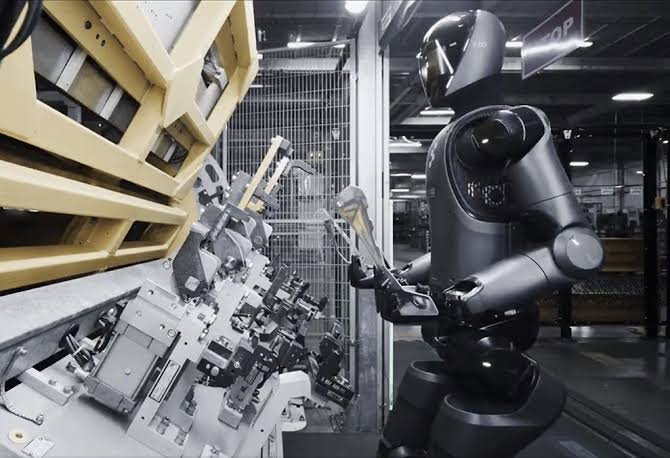
Humanoid robots have received significant attention as researchers and companies explore machines designed to operate in environments built for humans. A humanoid robot typically has a body configuration that resembles the general structure of a person, potentially including arms, legs, a torso, and a head-like sensor system. The motivation for this design is that many workplaces and homes are already designed around human dimensions and tools. A robot that can walk, reach shelves, manipulate objects, and use existing equipment could potentially operate without requiring major infrastructure changes. However, humanoid robotics remains technically challenging because walking, balance, manipulation, perception, and safe interaction all need to work together.
Robot manipulation is one of the hardest problems in general-purpose robotics. Picking up a known object in a controlled factory environment can be relatively straightforward, but handling arbitrary objects in a cluttered environment is much more difficult. Objects can have different shapes, textures, weights, flexibility, and friction characteristics. A robot may need to recognize an object, determine how to grasp it, estimate the appropriate amount of force, and move it without dropping or damaging it. AI-based vision and control systems are being developed to improve robotic manipulation, but reliable general-purpose physical interaction remains an active research area.
Large AI models are also influencing robotics research. Vision-language-action systems attempt to connect perception, language instructions, and physical actions. Instead of programming every individual movement manually, developers can explore systems where a robot receives a higher-level instruction and uses AI to determine a sequence of actions. For example, a robot might be instructed to locate an object, pick it up, and place it somewhere else. Turning such instructions into safe and reliable physical behavior is significantly more difficult than generating a text response because the robot's actions directly affect the physical environment.
Training robots is another important area of research. Robots can learn through demonstrations, simulation, reinforcement learning, or combinations of these approaches. Simulation allows developers to train and test robotic behaviors in virtual environments before deploying them on physical machines. This can reduce some of the cost and risk associated with physical testing. However, a behavior that works perfectly in simulation may not work the same way in the real world because of differences in friction, lighting, sensor noise, object properties, and unexpected environmental conditions. This problem is often referred to as the simulation-to-real-world gap.
Edge computing can play an important role in robotics because robots often need to make decisions quickly. A robot cannot always depend on a distant cloud server for every movement because network delays or connectivity failures could affect operation. Local processors can handle tasks such as sensor processing, object detection, navigation, and motor control. Cloud platforms can still provide useful capabilities for storing data, training models, fleet management, software updates, and large-scale analytics. This combination allows robots to use local computing for immediate actions while taking advantage of centralized infrastructure for broader tasks.
Robot fleet management becomes important when organizations operate many robots. A warehouse, factory, or delivery company may have dozens or hundreds of machines working simultaneously. Software platforms can assign tasks, monitor battery levels, track locations, schedule maintenance, and update robot software. Fleet management can also help prevent robots from interfering with each other. As the number of machines increases, managing the entire fleet becomes a software and networking challenge as much as a hardware problem.
Battery technology can influence what robots are capable of doing. Mobile robots need enough energy to operate motors, sensors, processors, and communication systems. Larger batteries can increase operating time but also add weight. High-power applications such as humanoid robots and autonomous vehicles require careful energy management. Improvements in batteries, motors, power electronics, and energy-efficient processors can therefore contribute directly to robotic capabilities. Charging infrastructure and automated battery replacement systems can also influence how effectively robots can operate over long periods.
Robotic safety is particularly important when machines operate near people. A robot must be able to detect humans and respond appropriately to unexpected movements. Safety systems can include physical barriers, emergency stops, force limits, sensors, speed restrictions, and software controls. Collaborative robots require careful risk assessment because their design may allow closer interaction with people. The exact safety requirements depend on the application and relevant standards. As robots become more autonomous, safety systems will need to account for both hardware failures and unexpected software behavior.
Cybersecurity is another growing concern for connected robots. Modern robots may communicate with cloud platforms, factory networks, mobile applications, or other machines. If a robotic system is compromised, attackers could potentially disrupt operations or manipulate physical equipment. Security measures can include encrypted communication, strong authentication, access controls, secure software updates, network segmentation, logging, and continuous monitoring. Robotics companies therefore need to treat cybersecurity as part of the machine's overall design rather than as an optional software feature.
Robotics can also change the nature of human work. Automation can reduce the amount of time people spend on repetitive or physically demanding tasks, while creating demand for workers who can program, operate, maintain, supervise, and integrate robotic systems. The impact is likely to vary significantly by industry and job type. Some tasks may become automated while other tasks become more productive because workers have robotic assistance. Organizations implementing robotics therefore need to consider training, workplace design, safety, and how human responsibilities will change alongside the technology.
Education is another area where robotics can provide practical benefits. Educational robots can help students learn programming, electronics, engineering, mathematics, and problem-solving. Students can build robots, program sensors, experiment with autonomous movement, and learn how software interacts with physical hardware. Robotics competitions and educational kits can make engineering concepts more interactive. The combination of hardware and software gives students an opportunity to see the results of their programs in the physical world.
Home robotics continues to develop as well. Robot vacuum cleaners and lawn-mowing systems are already examples of consumer robotics. More advanced home robots could potentially assist with household tasks, monitoring, entertainment, or accessibility. However, home environments are much less predictable than factories. Objects can move, rooms can change, people and pets behave unpredictably, and tasks often require fine motor skills. These challenges make general-purpose home robots considerably more difficult to build than robots designed for narrow tasks.
Accessibility is another potential area for robotics. Assistive robots and robotic devices can help people with certain physical limitations perform tasks that may otherwise be difficult. Robotic arms, exoskeletons, mobility systems, and other assistive technologies can provide physical support. Designing these systems requires a strong understanding of human movement, comfort, safety, and individual needs. The goal is often to increase independence and support users rather than simply automate a task.
The future of robotics will likely involve greater integration between physical machines and software intelligence. Robots are becoming increasingly capable of collecting large amounts of sensor data, processing information locally, connecting to cloud platforms, and using AI models to interpret their environments. This creates a feedback loop in which robots can observe, act, collect information, and improve system performance. However, increased intelligence does not eliminate the need for reliable hardware, careful engineering, safety testing, and human supervision.
One of the most important trends in robotics is the movement from highly specialized machines toward more flexible robotic systems. Traditional industrial robots can perform specific tasks extremely well, but changing their tasks can require significant reprogramming or physical adjustments. Newer systems aim to learn tasks from demonstrations, adapt to different objects, and use AI-based planning. If these technologies become sufficiently reliable, robots could potentially be deployed in a wider variety of environments. However, flexibility must be balanced against safety and reliability, especially when robots operate around people.
Robotics in 2026 is therefore developing across multiple directions at the same time. Industrial robots continue to improve, collaborative robots are expanding human-machine cooperation, autonomous mobile robots are supporting logistics, medical robots are assisting healthcare applications, agricultural robots are working in fields, drones are performing inspections, and humanoid systems are being researched for more general-purpose tasks. Artificial intelligence is connecting many of these developments by improving perception, planning, and decision-making.
The long-term future of robotics will depend on progress in several areas, including AI, sensors, batteries, actuators, materials, software, safety, and manufacturing. No single breakthrough will solve every robotics challenge. A capable robot requires many technologies to work together reliably. As hardware becomes more affordable and software becomes more intelligent, robotics could become increasingly common in workplaces and specialized consumer environments.
Robotics is ultimately about bringing computing into the physical world. Computers can process information extremely quickly, but robots can use that information to move, manipulate objects, inspect environments, and interact with physical systems. The combination of AI and robotics could therefore become an important part of the next stage of technological development. Rather than replacing every human activity, the most practical applications are likely to involve robots performing tasks where automation, precision, physical strength, continuous operation, or access to difficult environments provides a clear benefit. As these systems mature, robotics is likely to remain an important technology shaping manufacturing, logistics, healthcare, agriculture, research, and everyday life.
Robotics in 2026: How Intelligent Robots Are Transforming Industries and Everyday Life