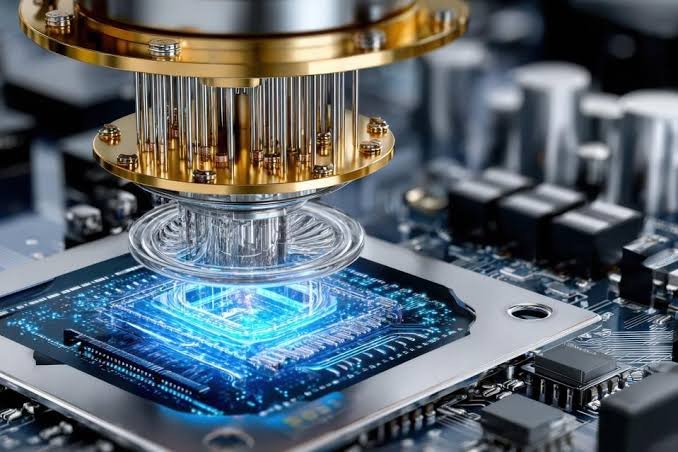
Quantum computing is one of the most advanced areas of modern computer science and physics, and it is attracting increasing attention from technology companies, researchers, universities, and governments around the world. Unlike traditional computers, which process information using bits represented as zeros and ones, quantum computers use quantum bits, commonly called qubits. Qubits can operate according to the principles of quantum mechanics, allowing quantum systems to process certain types of problems in fundamentally different ways from classical computers. Quantum computing is still an emerging technology, and practical large-scale quantum computers capable of solving broad real-world problems are not yet a replacement for conventional computers. However, continued research into quantum hardware, algorithms, error correction, and hybrid computing is expanding the potential applications of this technology. In 2026, quantum computing remains an important research area because it could eventually influence fields such as cryptography, drug discovery, materials science, optimization, artificial intelligence, finance, chemistry, and scientific simulation.
The basic idea behind quantum computing begins with the qubit. A traditional computer stores information using bits, where each bit has a value of either zero or one. A qubit can exist in a quantum state that combines possible zero and one states until it is measured. This property is commonly described using the concept of superposition. Superposition does not simply mean that a quantum computer performs every possible calculation simultaneously in the way popular explanations sometimes suggest. Instead, quantum algorithms manipulate probability amplitudes so that useful results can become more likely when the system is measured. Designing these algorithms correctly is one of the central challenges of quantum computing, and the advantage of quantum systems depends heavily on the specific problem being solved.
Another important concept in quantum computing is entanglement. Quantum entanglement describes a relationship between quantum states in which the states of multiple qubits can become correlated in ways that do not have a direct classical equivalent. Entanglement is an important resource for many quantum algorithms and communication protocols. When combined with superposition and carefully designed quantum operations, entangled qubits can enable quantum computers to represent and manipulate complex mathematical states. However, creating and maintaining useful entanglement is technically difficult because quantum systems are highly sensitive to their surrounding environment.
Quantum gates are used to manipulate qubits. They are somewhat comparable to logic gates in classical computing, but they operate according to quantum mechanics. Quantum circuits combine different gates to perform calculations. Developers can design circuits using quantum programming frameworks and execute them on quantum processors or simulators. Because quantum computers operate differently from traditional processors, writing quantum software requires a different way of thinking about algorithms and computation. Some quantum algorithms can provide significant theoretical advantages for particular mathematical problems, while many everyday computing tasks remain more efficiently handled by classical machines.
One of the most important challenges facing quantum computing is quantum error. Qubits are extremely sensitive to environmental disturbances, temperature, electromagnetic interference, material imperfections, and other sources of noise. These disturbances can cause quantum information to change before a computation is completed. Classical computers also experience errors, but modern digital systems can use well-established error correction techniques because classical bits are relatively stable. Quantum error correction is considerably more difficult because measuring a quantum state directly can disturb the information being stored. Researchers therefore develop sophisticated methods for detecting and correcting errors while preserving the logical quantum information.
Quantum error correction is considered one of the major requirements for building large-scale fault-tolerant quantum computers. A logical qubit may need to be represented using multiple physical qubits so that errors can be detected and corrected. This means that building a useful quantum computer can require many more physical qubits than the number of logical qubits needed for a particular algorithm. Improving hardware quality and reducing error rates can therefore be as important as increasing the raw number of qubits. Quantum computing progress should not be measured only by a single qubit count because factors such as connectivity, gate fidelity, coherence, error rates, and system architecture also influence the usefulness of a quantum processor.
Different approaches to building quantum computers are being investigated. Some systems use superconducting circuits, while others investigate trapped ions, neutral atoms, photons, quantum dots, and other physical platforms. Each approach has different engineering characteristics and challenges. Superconducting systems can support fast quantum operations but generally require extremely low temperatures. Trapped-ion systems can offer strong control over individual quantum states but may face challenges involving scaling and operation speed. Photonic approaches use particles of light and can offer interesting possibilities for communication and computing. Neutral-atom systems are also being explored for building scalable quantum processors. No single hardware architecture has established itself as the universal solution for every quantum computing requirement.
Quantum computing is particularly interesting for chemistry and materials science because molecules and materials themselves follow quantum mechanical rules. Simulating complex molecular systems on traditional computers can become computationally expensive as the number of interacting particles increases. Quantum computers could eventually provide new methods for simulating molecular behavior and chemical reactions. This could have applications in pharmaceutical research, battery development, catalysts, industrial chemistry, and materials discovery. However, useful large-scale quantum simulation remains a challenging research goal, and practical applications depend on continued improvements in quantum hardware and algorithms.
Drug discovery is another field that could potentially benefit from quantum computing. Researchers need to understand how molecules interact with biological systems, and computational models can help identify promising compounds. Quantum computers could eventually help simulate molecular interactions that are difficult to represent efficiently using classical methods. The potential benefit is not that a quantum computer would automatically invent new medicines, but that it could become another computational tool for researchers studying complex chemical systems. Quantum and classical computing could work together, with traditional systems managing data, machine learning, and workflow operations while quantum processors handle selected computational tasks.
Optimization is another area frequently associated with quantum computing. Many industries need to find efficient solutions among huge numbers of possible combinations. Examples include transportation scheduling, logistics, supply chain management, financial portfolio construction, manufacturing processes, and resource allocation. Some quantum algorithms and quantum-inspired techniques are being investigated for optimization problems. However, quantum advantage for practical optimization remains an active research area. Not every optimization problem benefits from quantum computing, and classical optimization methods continue to be extremely powerful. Future systems may use hybrid approaches in which classical and quantum processors work together.
Financial services are also exploring potential quantum computing applications. Financial institutions perform complex calculations involving risk analysis, portfolio optimization, pricing models, fraud detection, and other computational tasks. Quantum algorithms may eventually provide advantages for some of these calculations. At the same time, financial organizations are already paying attention to quantum security because sufficiently powerful quantum computers could threaten some existing public-key cryptographic systems. This means quantum technology is relevant to finance not only because of potential computational advantages but also because of future cybersecurity requirements.
One of the most discussed consequences of quantum computing is its potential impact on cryptography. Many widely used public-key encryption systems depend on mathematical problems that are difficult for classical computers to solve efficiently. A sufficiently powerful fault-tolerant quantum computer could potentially use algorithms such as Shor's algorithm to solve certain of these problems much faster. This does not mean that current encryption can suddenly be broken by today's quantum computers. Large-scale fault-tolerant quantum systems capable of threatening widely deployed cryptographic systems remain a major technical challenge. However, organizations are already considering the transition to post-quantum cryptography because sensitive information may need to remain secure for many years.
Post-quantum cryptography focuses on cryptographic algorithms designed to remain secure against both classical and quantum computer attacks. Unlike quantum cryptography, which can involve physical quantum communication systems, post-quantum cryptography generally refers to mathematical cryptographic algorithms that can run on conventional computers while being designed to resist known quantum attacks. This distinction is important because organizations can begin preparing for the future of quantum computing without needing to replace their entire infrastructure with quantum hardware. Migrating cryptographic systems can take significant time because certificates, applications, devices, protocols, and third-party services may all depend on existing cryptographic technologies.
The concept of quantum advantage is also important when discussing the future of quantum computing. Quantum advantage refers to situations where a quantum computer can perform a useful computational task more effectively than available classical alternatives. Demonstrating a theoretical quantum speedup is different from demonstrating a practical advantage in a real business environment. A quantum system may complete a specific calculation quickly, but if preparing the data, transferring information, correcting errors, and interpreting the output require substantial classical processing, the overall system may not outperform a classical solution. Researchers therefore examine end-to-end performance rather than only the speed of an individual quantum circuit.
Hybrid quantum-classical computing is one potential path toward practical applications. Current quantum processors are generally specialized systems that work alongside classical computers rather than independently replacing them. A classical computer can prepare data, control the quantum processor, analyze measurement results, and optimize parameters. The quantum processor can be used for specific parts of a larger algorithm. This approach allows researchers to experiment with quantum algorithms while taking advantage of the mature capabilities of classical computing infrastructure. As quantum hardware improves, hybrid architectures may become increasingly important for practical workloads.
Quantum machine learning is another emerging research area. Researchers are investigating whether quantum systems can provide advantages for specific machine learning tasks, including data processing, optimization, classification, and model training. Quantum machine learning should not be confused with simply running existing AI models on quantum hardware. The field involves designing algorithms that use quantum operations in ways that could potentially improve particular computational tasks. At present, many quantum machine learning ideas remain experimental, and practical advantages over classical machine learning have not been established broadly across everyday applications.
Quantum computing also creates opportunities for education and software development. Developers can experiment with quantum programming environments without owning physical quantum computers because cloud-based quantum platforms and simulators can provide access to quantum processors or virtual environments. Programming languages and frameworks allow researchers and students to construct quantum circuits, test algorithms, and explore quantum concepts. This lowers the barrier to experimentation and allows a larger community of developers to learn about quantum computing. However, quantum programming remains a specialized skill that combines concepts from computer science, mathematics, and physics.
One of the biggest misconceptions about quantum computing is that quantum computers will simply replace traditional computers. That is unlikely to be the most useful way to understand the technology. Classical computers are extremely effective for everyday tasks such as web browsing, word processing, database management, gaming, software development, and business applications. Quantum computers are designed for different types of computational problems. Future computing environments may therefore combine classical CPUs, GPUs, specialized accelerators, and quantum processors. Each technology could handle workloads for which it is most appropriate.
Quantum computing hardware also presents significant engineering challenges. Some quantum systems require specialized cooling equipment, highly controlled environments, precision electronics, and advanced fabrication techniques. Scaling from a research device to a reliable large-scale computing platform requires improvements across many areas. Engineers need to increase the number of useful qubits while maintaining low error rates and reliable connections between them. They also need to develop control systems, packaging, software, and error correction methods that can operate at scale. This makes quantum computing a multidisciplinary field involving physics, engineering, materials science, computer science, mathematics, and software development.
The energy requirements of quantum computing are also an interesting consideration. Quantum processors themselves may operate under highly specialized physical conditions, and the supporting infrastructure can be significant. For example, some superconducting quantum systems require cryogenic refrigeration. As quantum computers become larger, researchers need to consider the efficiency of the entire system rather than only the processor. A quantum computer that performs a calculation efficiently but requires substantial supporting infrastructure may have different economic and environmental characteristics from a conventional computing system. Future engineering improvements could influence these trade-offs.
Quantum networking is another area of research that could expand the role of quantum technologies. Quantum networks aim to connect quantum devices and potentially enable new communication and computing capabilities. One area of interest is quantum key distribution, which uses quantum properties to support secure key exchange under specific conditions. Quantum networking remains an emerging field, and building reliable long-distance quantum communication infrastructure presents substantial technical challenges. Researchers are investigating quantum repeaters, photonic technologies, and other approaches to creating larger quantum networks.
The development of quantum computing may also influence national technology strategies. Governments and research institutions are investing in quantum science because the technology could have implications for scientific research, cybersecurity, communications, and advanced manufacturing. Quantum capabilities may become strategically important as countries seek to develop expertise, infrastructure, intellectual property, and specialized workforces. At the same time, the field remains highly competitive and uncertain. Progress depends on scientific breakthroughs as well as engineering improvements, investment, and the ability to manufacture reliable quantum systems at scale.
For businesses, the most practical approach to quantum computing today is often to understand where the technology could eventually affect their industry rather than immediately replacing existing computing infrastructure. Companies can monitor developments in quantum hardware, evaluate whether their long-lived data could be affected by future cryptographic advances, and explore post-quantum security strategies. Organizations with computationally intensive problems may also experiment with quantum software and cloud-based quantum platforms. Building internal knowledge can help businesses understand potential opportunities without assuming that quantum computing is already ready for every commercial application.
The quantum computing workforce is also likely to expand as the technology matures. The field requires researchers with specialized knowledge of quantum physics, algorithms, hardware engineering, computer science, cybersecurity, and mathematics. Software developers who understand both conventional programming and quantum concepts may find opportunities in quantum software development and research. Universities and technology companies are therefore developing educational programs and tools to help students and professionals build quantum computing skills. Because the field is still developing, interdisciplinary knowledge can be particularly valuable.
The future of quantum computing will depend on whether researchers can overcome several difficult challenges at the same time. Increasing qubit counts alone is not enough. Quantum systems need better reliability, error correction, connectivity, control, software, and scalable manufacturing. Algorithms also need to demonstrate meaningful advantages for practical problems. If these challenges are solved, quantum computing could become an important specialized layer of the global computing ecosystem. If progress is slower than expected, the technology may remain primarily focused on research and specialized applications for longer than currently anticipated.
Quantum computing in 2026 should therefore be viewed as an emerging technology rather than a replacement for conventional computing. Its potential comes from the unusual properties of quantum systems and the possibility of solving certain problems in fundamentally different ways. At the same time, significant engineering and scientific challenges remain before large-scale fault-tolerant quantum computing becomes widely practical. Research into quantum hardware, algorithms, error correction, cryptography, and quantum software continues to shape the field.
As computing technology continues to evolve, the most likely future is not a world where quantum computers replace every traditional machine. Instead, quantum processors may become specialized tools that work alongside classical computers, GPUs, cloud infrastructure, artificial intelligence systems, and other accelerators. Such a computing environment could allow different types of processors to work together according to the requirements of each problem. Quantum computing is still on a long development path, but its potential impact on scientific research, cybersecurity, materials, chemistry, optimization, and advanced computing makes it one of the most important emerging technologies to watch in the coming years.
Quantum Computing in 2026: How Quantum Technology Could Transform Modern Computing