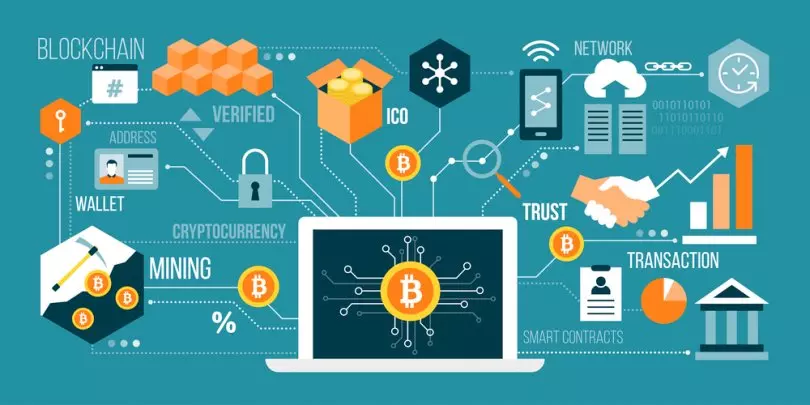
Blockchain technology has become an important topic in the world of modern technology because of its connection with cryptocurrencies and its potential applications across different industries. At its core, blockchain is a method of storing and sharing digital records across a network of computers. Instead of depending entirely on a single central database, blockchain systems can distribute records among multiple participants in a network. Information is organized into groups called blocks, and these blocks are connected together in a chronological structure. This approach can provide a transparent and tamper-resistant way of maintaining certain types of digital records.
Blockchain became widely known through cryptocurrencies, where it is used to record transactions between participants. However, the technology is not limited to digital currencies. Organizations and developers have explored blockchain for applications involving supply chains, digital identity, financial services, document verification, asset management, and other situations where multiple parties need to share and verify records. The usefulness of blockchain depends on the specific requirements of an application and how the system is designed.
A blockchain network generally consists of multiple computers or participants that maintain or interact with a shared record. When a transaction or piece of information is submitted, the network uses predefined rules to validate it. Once information is accepted and added to the blockchain, it becomes part of the chain of records. Different blockchain systems use different methods for reaching agreement between participants, commonly known as consensus mechanisms. These mechanisms are designed to help the network agree on which information should be added to the shared record.
One of the important characteristics of blockchain is that records can be difficult to alter after they have been confirmed and added to the chain. Each block is connected to previous information through cryptographic techniques, which means changing an earlier record can affect the relationship between multiple blocks. The exact level of protection depends on the design and implementation of the particular blockchain network. This characteristic can make blockchain useful for applications where maintaining the integrity of records is important.
Cryptocurrency is one of the most well-known uses of blockchain technology. Digital currencies can use blockchain networks to record transactions and maintain a shared history of ownership and transfers. Instead of relying on a traditional centralized database operated by one organization, some cryptocurrency networks allow transactions to be verified and recorded through a distributed network. Different cryptocurrencies use different technical designs, so the way transactions are processed and validated can vary between networks.
Blockchain is also being explored in supply-chain management. Modern supply chains often involve manufacturers, suppliers, transport companies, warehouses, retailers, and customers. Information can pass through multiple organizations, making it difficult to maintain a consistent record of where a product came from and how it moved through the supply chain. A blockchain-based system can provide a shared record that authorized participants can use to track certain information about products and transactions. The practical value depends on the quality and accuracy of the information entered into the system.
Financial services are another area where blockchain technology is being explored. Financial institutions and technology companies have investigated blockchain for payments, settlement systems, asset transfers, digital records, and other financial processes. Blockchain-based systems can potentially automate certain transactions through programmable rules and smart contracts. However, financial applications also need to consider regulations, security, scalability, privacy, and operational requirements.
Smart contracts are another important concept associated with blockchain technology. A smart contract is software stored or executed on a blockchain network that can perform predefined actions when specified conditions are met. For example, a system could be designed to release a digital asset when certain conditions are verified. Smart contracts can reduce the need for manual processing in some situations, but they must be carefully designed because programming errors or incorrect conditions can produce unexpected results.
Blockchain technology is also being considered for digital identity systems. Traditional identity systems often require users to provide information to different organizations separately. Blockchain-based identity solutions may allow certain identity information or credentials to be verified through a distributed system. However, identity applications require strong privacy and security controls because identity information can be highly sensitive.
Another possible application is document and certificate verification. Educational institutions, professional organizations, and other entities can explore blockchain-based systems for verifying credentials or records. If a digital certificate is recorded or linked to a blockchain-based verification system, another organization may be able to confirm its authenticity without depending entirely on manual verification. The actual usefulness depends on how the system is implemented and how participating organizations use it.
Despite its potential, blockchain technology has several challenges. Scalability is one of them because some blockchain networks can face limitations when processing large numbers of transactions. Depending on the consensus mechanism and network design, transaction speed and resource requirements can vary significantly. Developers therefore need to select an appropriate architecture for the intended application.
Security is another important consideration. Although blockchain records can provide strong protection against certain types of modification, blockchain applications can still contain vulnerabilities. Cryptocurrency exchanges, digital wallets, smart contracts, applications, and user accounts can be targeted by attackers. Protecting private keys and securing applications are therefore important parts of using blockchain-based systems.
Privacy can also be complicated because some blockchain networks are designed to maintain publicly visible transaction records. Transparency can be useful for certain applications, but it may not be appropriate for information that needs to remain confidential. Different blockchain designs use different approaches to privacy, and organizations need to evaluate these characteristics before using the technology for sensitive information.
Blockchain technology is also sometimes associated with high energy consumption, particularly in systems that use energy-intensive consensus mechanisms. Not every blockchain operates in the same way, and energy requirements can vary significantly depending on the technology used. Developers have therefore explored alternative consensus mechanisms designed to reduce resource requirements.
The future of blockchain will depend on how effectively the technology can solve practical problems. Rather than being useful for every type of database or application, blockchain is generally most relevant in situations where multiple parties need to share records and where features such as distributed verification, transparency, or tamper resistance provide a meaningful benefit. Continued development in cryptography, decentralized applications, digital identity, financial technology, and distributed systems may create additional use cases.
Blockchain technology provides a different approach to storing and sharing digital records by allowing information to be maintained across a network rather than relying entirely on a single central database. Its applications extend beyond cryptocurrencies into areas such as supply-chain management, financial services, digital identity, document verification, and smart contracts. At the same time, issues involving scalability, privacy, security, energy consumption, and regulation need to be considered carefully. As organizations continue experimenting with distributed technologies, blockchain remains an important area of research and development within the broader technology industry.
Blockchain Technology Explained: How It Works and Its Real-World Applications