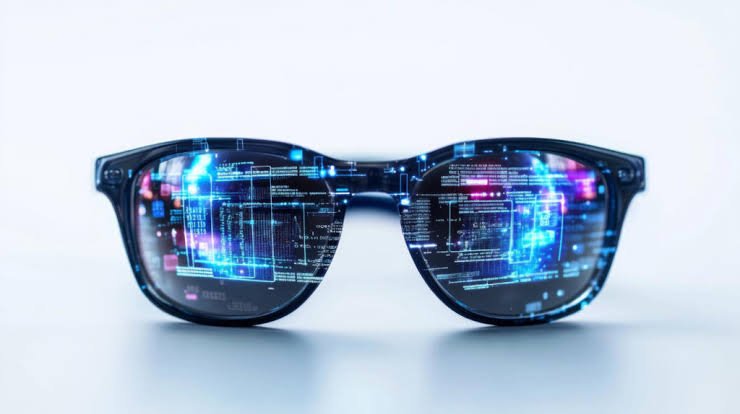
Smart glasses have been around for several years, but artificial intelligence is giving the category a completely different direction. Instead of simply recording videos or displaying information, newer AI-powered glasses are being designed to understand what the user sees and hears, answer questions and provide information without requiring the user to constantly look at a phone.
That sounds convenient, but it also creates a problem that technology companies cannot easily ignore: privacy.
A smartphone usually makes it obvious when someone is taking a picture or recording a video. AI glasses are different because the camera and microphone are built into something that looks like an ordinary pair of glasses. Someone wearing them could potentially capture audio or images without people nearby immediately realizing what is happening. This has already led to concerns about recording and consent in public places.
The technology companies developing these products are trying to make the devices useful without making people uncomfortable. Some companies are exploring camera-free designs, while others are working on ways to make recording more visible. Physical indicators, lights, sounds and user-controlled recording are some of the approaches being considered to make it clearer when a device is actively capturing information.
The privacy issue becomes even more complicated when AI is involved. A normal camera simply records an image, but an AI-powered device can potentially analyse what it sees. It could identify objects, understand text, recognise surroundings or provide information based on what is happening around the wearer. That makes the device more useful, but it also raises questions about what information is being collected and where that information goes.
Another important question is whether the processing happens on the device or in the cloud. Processing information locally can reduce the amount of personal data that needs to be sent to remote servers. However, powerful AI models can require significant computing resources, so companies have to balance privacy, battery life, device size and performance.
This is one reason the development of AI wearables is not simply a hardware challenge. Companies also need to think about software architecture, data security and user controls. If a pair of glasses is going to continuously understand its surroundings, users need to know what the device is doing and have meaningful control over the information it collects.
The situation is somewhat similar to what happened when smartphones became equipped with increasingly powerful cameras and microphones. People initially had concerns about being photographed or recorded without their knowledge, and society gradually developed expectations and rules around how those features should be used. AI glasses may go through a similar process, although their always-available nature could make the discussion more complicated.
Companies are also experimenting with different forms of AI hardware. Smart glasses are getting most of the attention, but AI pins, wearable recorders and other small devices are being developed as alternatives to traditional smartphones. Some products are designed around deliberate recording, where the user has to physically activate the device before it captures audio.
For consumers, this means the most important feature of an AI wearable may not be how powerful its AI model is. Trust could become just as important. People may be more willing to use a device that clearly shows when it is recording and gives them control over how their information is processed.
The technology is still developing, and it is too early to know which type of AI wearable will become a mainstream product. But the direction is clear. Technology companies are trying to move AI away from the traditional computer and smartphone screen and into devices that people can wear throughout the day.
If AI glasses are going to become a normal part of everyday life, convenience will only be one part of the equation. Users will also want to know when they are being recorded, what the device understands about their surroundings and who has access to that information.
The next major challenge for AI wearables may therefore not be making them smarter. It may be making them smart enough to be useful while still giving people a reason to trust them.
AI Smart Glasses Are Getting Smarter, But Privacy Remains a Big Concern