
Introduction
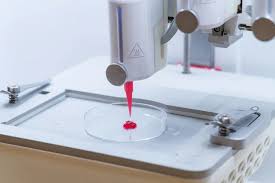
In a groundbreaking advancement in regenerative medicine, researchers at Linköping University, Sweden, have developed a 3D-printed artificial skin that supports blood circulation. Unlike traditional engineered skin substitutes that only replicate the outer layers, this innovative model integrates vascular networks, enabling oxygen and nutrients to reach all layers of the graft.
This scientific breakthrough marks a major step toward treating patients suffering from severe burns, chronic wounds, and traumatic injuries, where natural healing is not possible. Published recently in Advanced Healthcare Materials, the study introduces two powerful technologies—μInk bioink and REFRESH hydrogel channels—that together allow the creation of thick, cell-rich, vascularized skin.
In this article, we will dive into:
- What this new 3D-printed skin is and how it works
- The dual technologies that make it possible
- Experimental outcomes from animal trials
- Potential clinical applications and future challenges
- Why this discovery is considered a game-changer for healthcare
Background: Why 3D-Printed Skin Matters
Our skin is not just a covering; it is a complex organ with multiple roles:
- Protection from infections, UV rays, and toxins
- Thermoregulation through sweat glands and blood vessels
- Sensory perception via nerve endings
- Fluid balance by preventing dehydration
Traditional Limitations
- Skin grafts: Currently, patients with severe burns often receive skin grafts, either autografts (from their own body) or donor skin. However, grafts are limited in availability and do not always integrate well.
- Artificial skin substitutes: Several models exist, but they usually only replicate the epidermis (outer layer). Without blood vessels, these substitutes face oxygen/nutrient shortages, leading to cell death in the inner layers.
- Outcome: Healing remains incomplete, scars form, and skin functions such as sweating, elasticity, and sensitivity are compromised.
The ability to engineer a vascularized skin substitute that mimics both the dermis and epidermis has been the “holy grail” of tissue engineering for decades.
The Breakthrough: Two Key Technologies
The Linköping team’s discovery is built on two complementary methods that solve the vascularization challenge:
1. μInk (Micro-Ink Bioink)
- A specially designed bioink consisting of:
- Fibroblasts (dermal cells that produce collagen and elastin)
- Gelatin micro-beads providing porous surfaces for cells to grow
- Hyaluronic acid gel to maintain hydration and mimic the skin matrix
- Results:
- Produces cell-dense structures that secrete collagen.
- When transplanted into mice, these constructs supported blood vessel formation, proving vascular integration.
2. REFRESH (Rerouting of Free-Floating Suspended Hydrogel Filaments)
- Technique where hydrogel threads are printed and later removed using enzymes.
- Once removed, the channels remain—acting as vascular pathways.
- Properties:
- Strong yet flexible threads that hold shape.
- Can be printed into various geometries (straight, knotted, braided).
- Provide the framework for blood flow and nutrient distribution.
Combined Effect
By combining μInk’s high cellular density with REFRESH’s vascular channels, the researchers succeeded in creating thick, vascularized skin constructs that can remain viable in living organisms.
Experimental Studies and Findings
The results were published in two studies in Advanced Healthcare Materials:
- Study 1: μInk Bioink
- Printed dermal structures were transplanted into mice.
- Observed collagen production and vascularization within days.
- Showed that fibroblast-based bioink can thrive when properly supplied with oxygen.
- Study 2: REFRESH Hydrogel Channels
- Demonstrated successful printing of shape-memory hydrogel threads.
- After enzymatic removal, created functional hollow vascular channels.
- Enabled perfusion of liquids—an essential step toward blood circulation.
“Skin in a Syringe”
- The team also developed a gel with living cells that behaves like a liquid under pressure but solidifies again once released.
- This means artificial skin can be injected or printed directly onto wounds, offering revolutionary clinical applications.
Scientific Significance
- Overcoming the Oxygen Barrier
- Previously, thick grafts would fail because oxygen and nutrients couldn’t penetrate deep tissue.
- Vascularized channels now solve this problem.
- True Dermis Regeneration
- Fibroblasts, collagen, and hyaluronic acid restore skin elasticity and strength.
- Opens the door to healing with minimal scarring.
- Functionality Beyond Coverage
- Instead of being just a covering, the new skin has the potential to restore thermoregulation, sensitivity, and flexibility.
- Foundation for Advanced Regenerative Medicine
- Paves the way for creating full-thickness, functional skin grafts.
- Could later integrate appendages such as hair follicles, sweat glands, and nerves.
Potential Applications
- Burn Victims: Patients with deep third-degree burns often lack enough donor skin. This technology could provide life-saving grafts.
- Chronic Wounds: Diabetic ulcers, pressure sores, and other long-healing wounds.
- Trauma and Surgery: Large injuries from accidents or reconstructive surgeries.
- Cosmetic and Plastic Surgery: Natural-looking grafts that restore both form and function.
Challenges and Limitations
Despite its promise, the technology is still in its early stages:
- Human Trials Pending
- Current results are limited to animal studies.
- Human immune responses, rejection risks, and infection control must be studied.
- Complexity of Skin Appendages
- Current models focus on dermis and blood vessels.
- Still missing sweat glands, sebaceous glands, pigmentation, and nerves.
- Cost and Scalability
- 3D bioprinting remains expensive.
- Large-scale production for hospitals must be economically viable.
- Long-Term Viability
- Needs proof of function over months and years, not just weeks.
Future Directions
- Human Clinical Trials: The next crucial step before commercialization.
- Integration of Appendages: Including hair follicles, sweat glands, and sensory nerves.
- Advanced Bioinks: Adding stem cells for self-regenerating skin.
- Personalized Medicine: Using a patient’s own cells to reduce rejection risk.
- Regulatory Approvals: Establishing safety, ethics, and global guidelines.
Conclusion
The creation of 3D-printed artificial skin that allows blood circulation represents one of the most exciting breakthroughs in regenerative medicine. By solving the long-standing challenge of vascularization, scientists are one step closer to developing functional, full-thickness skin grafts that can save lives and transform recovery for burn and trauma patients.
Although clinical use is still years away, this discovery signals a future where artificially engineered organs and tissues may become routine in medicine. For now, it offers renewed hope to millions who suffer from severe skin injuries worldwide.


 By
By